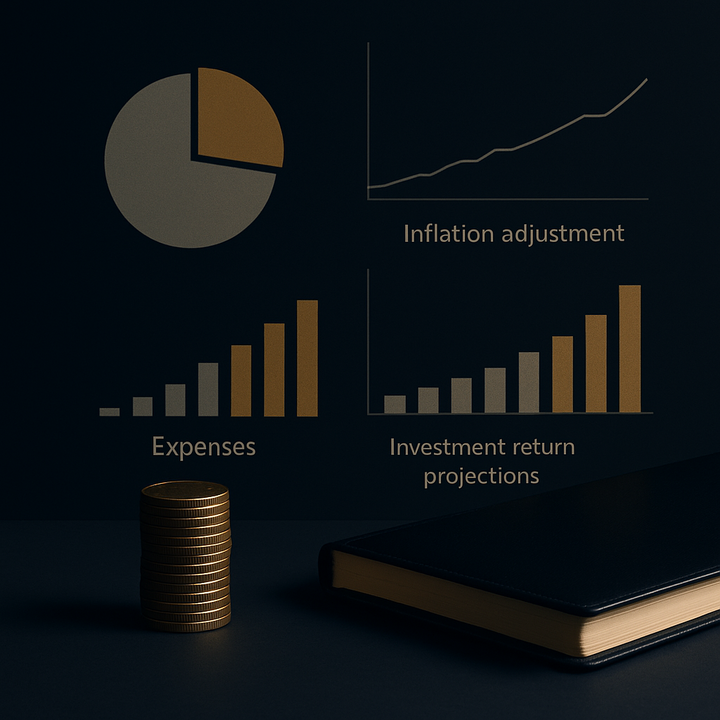
Inflation Retirement Planning: Strategies for Long-Term Financial Security
Introduction: Why Inflation Retirement Planning Is Crucial Today
Inflation retirement planning is more important than ever as individuals face longer lifespans and shifting economic forces. When you map out your retirement future, inflation—the sustained rise in the cost of goods and services—directly impacts how far your nest egg will stretch. Ignoring inflation risk can jeopardize your quality of life within just a few years of retirement. Because today’s retirees must navigate volatile markets and unpredictable inflation, embedding countermeasures into your financial plan is key for lasting security.
Understanding Inflation’s Role in Retirement Financial Planning
Inflation erodes money’s purchasing power over time. For example, $1,000 saved today may buy significantly less in 20 years if average inflation persists at 2%—even less if rates spike. The U.S. Consumer Price Index (CPI) and similar global measures track inflation’s direct effects on everyday spending. For retirees, whose income often comes from fixed sources or decumulating portfolios, even mild inflation steadily weakens your lifestyle. Inflation retirement planning calls for using real—rather than nominal—returns to estimate future income needs and adjust your savings targets accordingly.
Relying on traditional savings vehicles such as fixed-rate bonds, certificates of deposit, or static pensions increases risk when inflation rises faster than anticipated. These instruments provide nominal returns, which can appear attractive but may conceal poor real growth. Over 25 to 30 years, failing to shelter your principal from price growth could result in spending power loss of up to 50%, according to long-term historical data. Effective inflation retirement planning therefore requires integrating inflation assumptions at every stage of decision-making, from accumulation through withdrawal.
Why Ignoring Inflation Can Sabotage Retirement Goals
Ignoring inflation risk is a common oversight with costly results. Many retirees focus only on growing their portfolios without considering how future prices affect income needs and the feasibility of staying retired comfortably. When inflation is left out of retirement projections, you run the risk of underestimating how much you’ll really need to save, drawing down assets too quickly, or locking into annuities and pensions that lose real value each year. Inflation retirement planning involves revisiting projections regularly, especially during periods of heightened volatility.
History shows how inflation surprises can derail even well-funded retirement plans. The 1970s and early 1980s witnessed double-digit inflation in the U.S. and Europe, decimating the real value of fixed income streams. Similarly, emerging markets often experience abrupt inflation spikes, which can quickly erode poorly diversified portfolios. In addition, inflation does not impact all expenses equally—healthcare, housing, and other retirement staples often rise at rates exceeding headline inflation. Failure to prepare exposes you to the very real possibility of depleting assets years before anticipated.
Core Strategies for Inflation-Proof Retirement Portfolios
Mitigating inflation risk involves a proactive approach across several key areas. First, broad diversification remains foundational for effective inflation retirement planning. Equities have historically delivered long-term returns that outstrip inflation, particularly companies with the pricing power to pass costs on to consumers. Real assets, including real estate, commodities, and infrastructure, are valuable additions—they tend to rise in value along with, or sometimes ahead of, general inflation.
Additionally, specialized fixed income products help maintain purchasing power. Treasury Inflation-Protected Securities (TIPS) and other inflation-linked bonds adjust their principal and payouts based on official inflation data, providing consistent real returns. Layering in annuities with built-in inflation protection can reduce risk for those relying on a steady payout. For those with global exposure, international equities and emerging market bonds sometimes outperform local inflation during domestic downturns.
Practical asset allocation also includes maintaining flexibility. Strategic use of bond ladders—purchasing bonds of varying maturities—and adaptive glidepaths allow you to increase inflation protection as retirement approaches or responds to changing conditions. Regular rebalancing ensures you capitalize on asset classes that outperform during inflationary cycles, and avoids overconcentration that can backfire if inflation returns to normal levels.
The Advantages of Technology and Data in Inflation Retirement Planning
Technological advancements now empower savers and retirees to combat inflation with unprecedented precision. Digital planning platforms, robo-advisors, and sophisticated retirement calculators can factor real-time inflation trends, simulate various price scenarios, and personalize your asset allocation accordingly. These tools help project not only average outcomes, but also stress-test portfolios against worst-case inflation bursts.
Moreover, big data and AI now inform smarter withdrawal strategies and improve surveillance of personal expenses prone to inflation—such as healthcare or lifestyle. Automated portfolio management solutions can monitor inflation indices and execute rebalancing strategies in response, delivering agility that was formerly unavailable to individual investors. Adopting technology as a cornerstone of your inflation retirement planning greatly reduces the risks associated with human bias and outdated assumptions.
Behavioral Biases and the Dangers of Underestimating Inflation
Even the best tools and data must contend with human nature. Behavioral biases pose a subtle yet powerful threat to effective inflation retirement planning. Recency bias leads many investors to underestimate future inflation by projecting recent stability forward. This can turn reassuring past performance into a dangerous guide. Nominal illusion—the tendency to ignore real versus nominal values—lulls savers into a false sense of progress, risking underpreparedness for rapid future price spikes.
Stress testing your retirement assumptions using inflation estimates from volatile decades provides critical insights. You can adjust your withdrawals dynamically to safeguard principal during high-inflation periods. Regular strategy reviews, ideally aided by professional financial planning tools, ensure you adjust your plan as inflation risks evolve. Avoiding complacency remains essential for anyone serious about protecting their retirement savings.
Taking Advantage of Inflation Opportunities in Retirement
Inflation is not exclusively a threat. With the right approach, it can also offer opportunities to enhance your retirement outcomes. Certain asset classes—like commodities, natural resources, global real estate, and companies poised to thrive during supply chain dislocations—often outperform when inflation is high. Astute investors might shift allocations to overweight these inflation-resilient sectors during relevant cycles, thereby turning macroeconomic headwinds into tailwinds.
Economic transformations that fuel inflation often go hand-in-hand with innovation and new business models. For example, companies disrupting energy supply or logistics may benefit from both secular growth and inflation-driven pricing power. By staying informed and nimble, adaptive retirees can spot sectors where real returns exceed inflation, boosting portfolio resilience. Professional guidance and robust research help identify these opportunities while maintaining risk controls—integral to effective inflation retirement planning.
Real-Life Illustrations: Inflation’s Impact on Retirement Outcomes
Consider a retiree who retired at the start of the 2000s, expecting stable inflation but encountering unexpected surges, particularly in medical costs and housing. Had this individual kept most assets in fixed-rate bonds or cash while withdrawing at a static rate, their real purchasing power would have declined sharply—potentially leading to asset depletion within 15–20 years. In contrast, peers with a diversified mix of equities, inflation-protected bonds, and regular strategy reviews better preserved both principal and spending ability.
International diversification can further safeguard portfolios. Retirees with exposure to global markets typically fared better during regional inflation shocks. For instance, those investing beyond home-country bonds weathered crises in both developed and emerging markets. The broad lesson: dynamic, inflation-aware asset allocation and adaptive withdrawal rates are vital for security. Each real-world story underscores the necessity of ongoing vigilance and flexibility in inflation retirement planning.
Building a Resilient Inflation Retirement Plan: Key Steps
1. Start with clear, inflation-adjusted goals. Project your future expenses and income sources using realistic inflation expectations, not just historic averages. Revisit these goals regularly as economic data changes.
2. Diversify strategically across equities, inflation-linked bonds, real assets, and global securities. This reduces dependency on any single asset class or geographic region during inflation shocks.
3. Harness technology for scenario analysis and ongoing monitoring. Use financial planning tools to model outcomes under various inflation rates, and adjust allocations accordingly as needed.
4. Counter behavioral biases through automatic stress testing and regular plan checkups. Incorporate inflation scenarios that reflect both calm and turbulent historical periods for a balanced risk perspective.
5. Consider flexible withdrawal policies instead of rigid, static rules. Dynamic strategies based on current inflation trends and market performance protect your nest egg should conditions evolve.
Continuing Education’s Role in Effective Inflation Retirement Planning
As inflationary environments become more complex, ongoing financial education remains the cornerstone of successful retirement planning. Staying informed about changing economic conditions, regulatory shifts, and new financial instruments helps you respond proactively to risk. Many institutions and online platforms now offer education tailored to inflation retirement planning, covering both investment best practices and behavioral strategies.
In addition, networking with other retirees, advisors, and expert forums exposes you to fresh ideas for managing inflation. Collective knowledge helps you identify new risks, spot opportunities, and maintain the discipline needed to adjust your plan regularly. Embracing lifelong learning, therefore, underpins every resilient inflation retirement planning strategy.
Conclusion: Strong Inflation Retirement Planning for Secure Futures
Robust inflation retirement planning transforms uncertain futures into stable, secure retirements. By considering inflation at each step, diversifying across inflation-resistant investments, and revisiting your plan with the support of technology and sound education, you make your savings last. Avoiding behavioral pitfalls and seeking both protection and opportunity shields your wealth from inflation’s corrosive effects. For more in-depth insights on safeguarding your financial future, visit our Financial Planning and Retirement section.

Daniel Whitaker is a financial strategy writer focused on long-term wealth building, capital allocation discipline, and structural risk awareness. His work emphasizes clear financial frameworks, sustainable investment thinking, and practical decision-making designed to help readers build resilient financial systems rather than chase short-term trends.