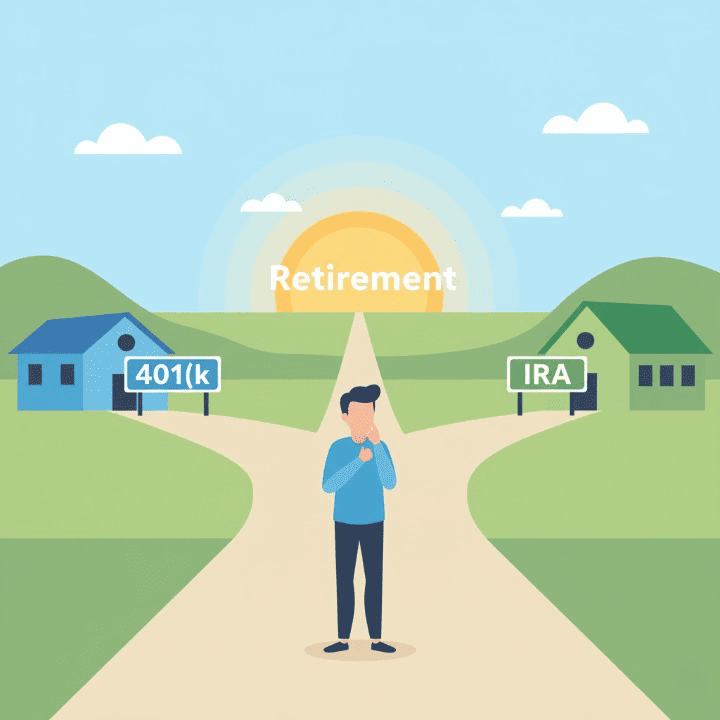
A Dynamic Retirement Investment Strategy: Tailoring Your Portfolio for Each Life Stage
Introduction
Planning for retirement is a long and dynamic journey, not a single destination. While most people understand the importance of saving, many do not realize that their investment strategy should not remain static over time. A portfolio that is perfect for a 25-year-old just starting their career would be disastrous for someone on the brink of retirement. A successful retirement investment strategy must evolve with you, adapting to your changing needs, risk tolerance, and time horizon. This article will guide you through the different phases of retirement planning, from your early career to your golden years, explaining how to adjust your portfolio to maximize growth, manage risk, and ultimately secure your financial future.
The Early Career (Ages 20s-30s): The Aggressive Growth Phase
Your 20s and 30s are arguably the most important time for your retirement savings. You have a long time horizon, often 30 to 40 years, before you need to access the money. This is the time to be bold and embrace a more aggressive investment strategy. The primary goal is to maximize the growth of your investments and harness the immense power of compounding.
During this phase, market volatility is your friend, not your enemy. A market downturn is a chance to buy assets at a lower price. A young investor has decades to recover from a market crash. The money you contribute today has the most time to grow and compound exponentially. For this reason, your portfolio should be heavily weighted towards growth assets like stocks. A portfolio with 80% to 100% in stocks is a common and appropriate allocation. You can achieve this by investing in low-cost index funds or Exchange-Traded Funds (ETFs) that track the broad market, such as the S&P 500. This provides instant diversification without the complexity of picking individual stocks.
Your focus should be on consistency. Set up automatic contributions to your retirement accounts, such as your 401(k) and IRA. By making your savings a habit, you ensure you are always investing, regardless of market conditions. This is the foundation of a robust long-term savings strategy that will pay off for the rest of your life.
The Mid-Career (Ages 40s-50s): The Balancing Act
As you enter your 40s and 50s, your financial life changes. Your income may be at its highest, but your time horizon until retirement is shrinking. You have a substantial nest egg, and your primary goal shifts from purely aggressive growth to a careful balance of growth and capital preservation. Your retirement investment strategy must become more nuanced.
This is the time to begin a slow and gradual shift from a growth-oriented portfolio to a more balanced one. You should start to introduce more conservative assets, such as bonds and other fixed-income securities. The inclusion of bonds helps to reduce your portfolio’s overall volatility, providing a cushion during stock market downturns. A portfolio with a 60% stock and 40% bond allocation is a common model during this phase. The specific ratio will depend on your personal risk tolerance.
This is also the time to pay close attention to asset allocation. As your investments grow at different rates, your portfolio can drift from its target allocation. For example, a strong stock market rally might cause your stock allocation to rise to 70% or 80% of your total portfolio. Rebalancing your portfolio, which involves selling some of the assets that have done well and buying more of the assets that have underperformed, is crucial. This disciplined practice helps you maintain your desired risk level and ensures you are not taking on more risk than you are comfortable with.
Nearing Retirement (Ages 50s-60s): The Capital Preservation Phase
As retirement moves from an abstract concept to a tangible reality, your investment strategy must undergo another significant shift. You no longer have decades to recover from a major market correction. Your primary goal is to protect the wealth you have accumulated. The focus now is on capital preservation, ensuring your nest egg is ready to support your lifestyle in retirement.
During this phase, you should continue to reduce your exposure to volatile assets. Your portfolio should have a higher percentage of fixed-income and cash. A common allocation might be 40% stocks and 60% bonds. The purpose of this shift is to secure the funds you will need for the first several years of retirement. You want to avoid a situation where a market downturn forces you to sell assets at a loss to fund your living expenses.
Many investors use a “bucket strategy” during this phase. They place funds needed for the next 1-3 years in a safe, liquid asset like a high-yield savings account or a money market fund. Funds needed for the next 5-10 years can go into bonds, while the remaining long-term funds stay invested in a mix of stocks and growth-oriented assets. This provides both short-term security and long-term growth potential. This thoughtful financial planning gives you a clear roadmap for managing your money as you transition out of the workforce.
The Retirement Phase (Ages 60s+): Generating Income
Congratulations, you’ve reached your goal! Now, your investment strategy changes once more. The objective is no longer to accumulate wealth, but to generate a reliable stream of income to fund your retirement lifestyle. You must learn to manage your withdrawals in a way that allows your portfolio to last for potentially 20 or 30 years.
A good withdrawal strategy is essential. A common rule of thumb is the 4% rule, which suggests that you can safely withdraw 4% of your total portfolio each year and adjust that amount for inflation. This strategy is designed to make your savings last. You should continue to have a diversified portfolio, with a mix of stocks and bonds. Some funds should be in safe assets to cover your immediate needs, while a portion remains invested in growth-oriented assets to provide a hedge against inflation and ensure your money does not run out.
The key to a successful retirement is flexibility. Be prepared to adjust your spending or your withdrawal rate based on market conditions. A retirement investment strategy should not be a rigid plan, but a flexible guide that adapts to the realities of your long life.
Conclusion
A single, static portfolio is simply not enough for a successful retirement. Your retirement investment strategy is a dynamic roadmap that must change as you move through life’s different stages. From the aggressive growth-focused portfolio of your early career to the capital preservation approach as you near retirement, each phase has its own unique goals and risks. By understanding these shifts and making proactive adjustments, you can build a resilient portfolio that is prepared for whatever the market brings. Your commitment to a dynamic, well-researched financial planning strategy is the most powerful tool you have for achieving your dreams of a secure and comfortable retirement.