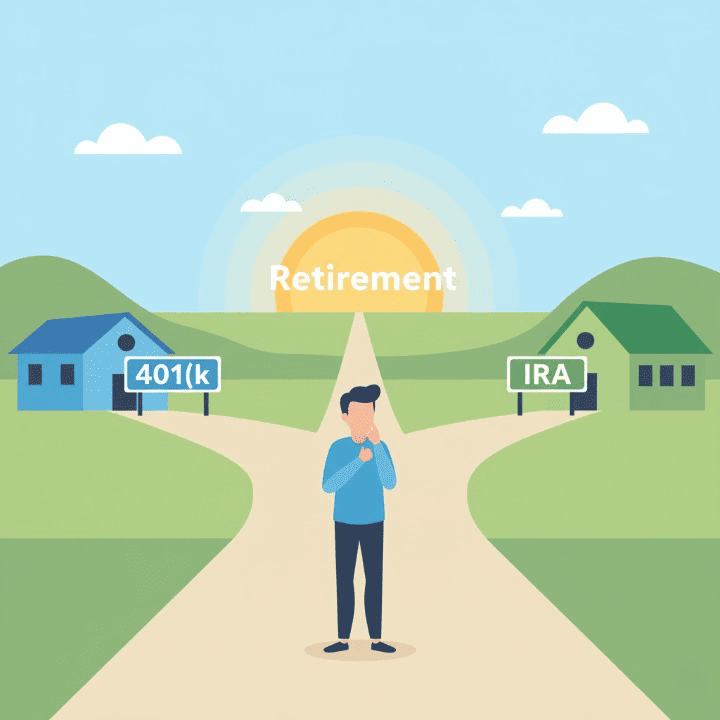
Top 401(k) Mistakes to Avoid for a Secure Retirement
Introduction
A 401(k) plan is one of the most powerful tools for building a secure retirement. It offers tax advantages and the potential for employer contributions. Millions of workers rely on these plans to fund their future. However, simply having a 401(k) is not enough. You must manage it wisely to maximize its growth potential. Unfortunately, many people make simple, avoidable errors that can significantly impact their savings over time. These missteps can lead to leaving money on the table or taking on unnecessary risk.
Understanding these common pitfalls is the first step toward a stronger financial future. Small adjustments to your strategy today can lead to a much larger nest egg tomorrow. This article will highlight the most critical 401(k) mistakes that investors make. We will explain why they are so damaging and, most importantly, provide clear, actionable steps on how to avoid them. By sidestepping these errors, you can ensure your retirement account is working as hard as you are to build the comfortable future you deserve.
Mistake 1: Not Contributing Enough to Get the Full Employer Match
One of the biggest financial errors you can make is failing to secure your full employer match. Many companies offer to match a certain percentage of your 401(k) contributions. For instance, a common offer is a dollar-for-dollar match on the first 3% to 6% of your salary that you contribute. This is essentially free money. It provides an immediate 100% return on your investment.
When you contribute less than the matched amount, you are walking away from a guaranteed part of your compensation package. Over time, this missed opportunity adds up significantly due to the power of compounding. For example, if your employer matches up to 5% and you only contribute 3%, you are losing out on an extra 2% of your salary each year. This can translate into tens or even hundreds of thousands of dollars in lost growth by the time you retire.
How to avoid this: Review your company’s 401(k) matching policy immediately. Find out the maximum percentage they will match. Then, make it your top priority to contribute at least that much from every paycheck. You should treat the employer match as a core part of your salary.
Mistake 2: Choosing overly Conservative or Aggressive Investments
Your 401(k) is a long-term investment vehicle. Therefore, your investment choices should align with your age and your expected retirement date. Many investors make the mistake of choosing an allocation that is not appropriate for their time horizon. This often happens in one of two ways.
First, younger investors might choose overly conservative investments, like stable value or money market funds. While these options feel safe, they offer very low returns. This safety comes at a high cost. It severely limits the growth potential of your portfolio over the decades you have until retirement. Young investors can afford to take on more risk for higher potential rewards.
On the other hand, investors nearing retirement might remain too aggressive. They may hold a high concentration of stocks. A major market downturn right before retirement could be devastating in this case. It could force them to delay retirement or live on less.
How to avoid this: Use target-date funds if you are unsure what to choose. These funds automatically adjust their asset allocation over time, becoming more conservative as you get closer to retirement. Alternatively, you can periodically re-evaluate your risk tolerance and rebalance your portfolio to match your long-term goals.
Mistake 3: Cashing Out Your 401(k) When You Change Jobs
Changing jobs is a common part of modern careers. When you leave an employer, you have several options for your old 401(k). Unfortunately, many people choose the worst one: cashing it out. This decision can cause severe damage to your retirement savings for multiple reasons.
First, the withdrawal is treated as taxable income. You will immediately owe federal and state income taxes on the entire amount. Secondly, if you are under the age of 59½, you will almost certainly face a 10% early withdrawal penalty. Between taxes and penalties, you could easily lose 30%, 40%, or even more of your savings right away.
Most importantly, you lose out on all future tax-deferred growth that money would have generated. Cashing out a seemingly small balance early in your career can cost you a massive amount in the long run.
How to avoid this: Never cash out your 401(k). Instead, choose one of these better options. You can roll the money over into an IRA (Individual Retirement Account). You can also roll it over into your new employer’s 401(k) plan, if allowed. In some cases, you can even leave it in your old employer’s plan.
Mistake 4: Taking a 401(k) Loan Without a Clear Plan
Many 401(k) plans allow you to borrow money from your account. This can seem like an attractive option for handling a major expense, like a down payment or a medical bill. The interest you pay goes back into your own account. However, taking a 401(k) loan is a risky move that should be approached with extreme caution.
The biggest risk occurs if you leave your job, either voluntarily or not. When this happens, you typically have a very short window to repay the entire loan balance in full. If you cannot repay it, the outstanding balance is treated as an early withdrawal. This means it becomes subject to income taxes and the 10% penalty.
Furthermore, while you are repaying the loan, the money you borrowed is not invested. This means you miss out on any potential market gains during that period. This can stunt the long-term growth of your retirement savings.
How to avoid this: Treat a 401(k) loan as an absolute last resort. Before you borrow from your future, exhaust all other options. If you must take a loan, ensure you have a solid plan to repay it quickly and understand the consequences if you leave your job.
Conclusion
Your 401(k) is a cornerstone of your retirement strategy, but it requires active and informed management. Avoiding common 401(k) mistakes is just as important as making contributions. Simple errors like missing out on the full employer match, choosing an improper asset allocation, or cashing out your account early can have devastating long-term consequences. These missteps can set your retirement goals back by years and significantly reduce the quality of your life in your later years.
Take the time to review your plan today. Ensure you are capturing every dollar of your employer match. Align your investments with your age and risk tolerance. And always protect your savings when you change jobs. By being a vigilant and proactive manager of your own retirement account, you can avoid these pitfalls. You will keep your savings on the right track, harnessing the full power of your 4-1(k) to build a financially secure and prosperous retirement.